Canggu gets recommended to almost everyone planning a Bali trip, but very few guides explain what that actually means once you land. It is not one beach or one street. It is a stretch of coastline made up of several neighborhoods, each with a different pace, and figuring that out on day one can eat into a trip that is only a few days long to begin with.
This guide covers the practical basics: where Canggu actually is, how to get there, what it costs, what to sort out before you fly, and how to plan your time once you arrive.
| Canggu at a Glance | What to know |
| Location | Bali's southwest coast, just north of Seminyak |
| Distance from airport | About 20 to 25 km, usually 30 to 45 minutes (over an hour in peak traffic) |
| Best time to visit | April to October, with May, June, and September offering the best balance |
| Peak season | July and August (busier and pricier) |
| Ideal stay | 3 to 5 days |
| Best area for first-timers | Batu Bolong |
| Getting around | Scooter, Grab or Gojek, or a private driver |
| Typical costs | Warung meal USD 2 to 5, cafe meal USD 10 to 20, scooter rental USD 5 to 7 per day |
| Before you fly | Pay Bali's tourist levy (IDR 150,000) and complete the All Indonesia arrival declaration |
Located roughly 45 minutes from the airport, Canggu is best explored over 3 to 5 days across distinct neighborhoods like Berawa, Batu Bolong, and Pererenan. Aim to visit between April and October for optimal weather, and make sure to complete the tourist levy and entry declarations before flying. While local costs easily accommodate both warung budgets and upscale dining, transport requires planning: you will need a motorcycle-endorsed International Driving Permit to rent a scooter legally, though ride-hailing and private drivers offer convenient alternatives.
Where Is Canggu and How Do You Get There
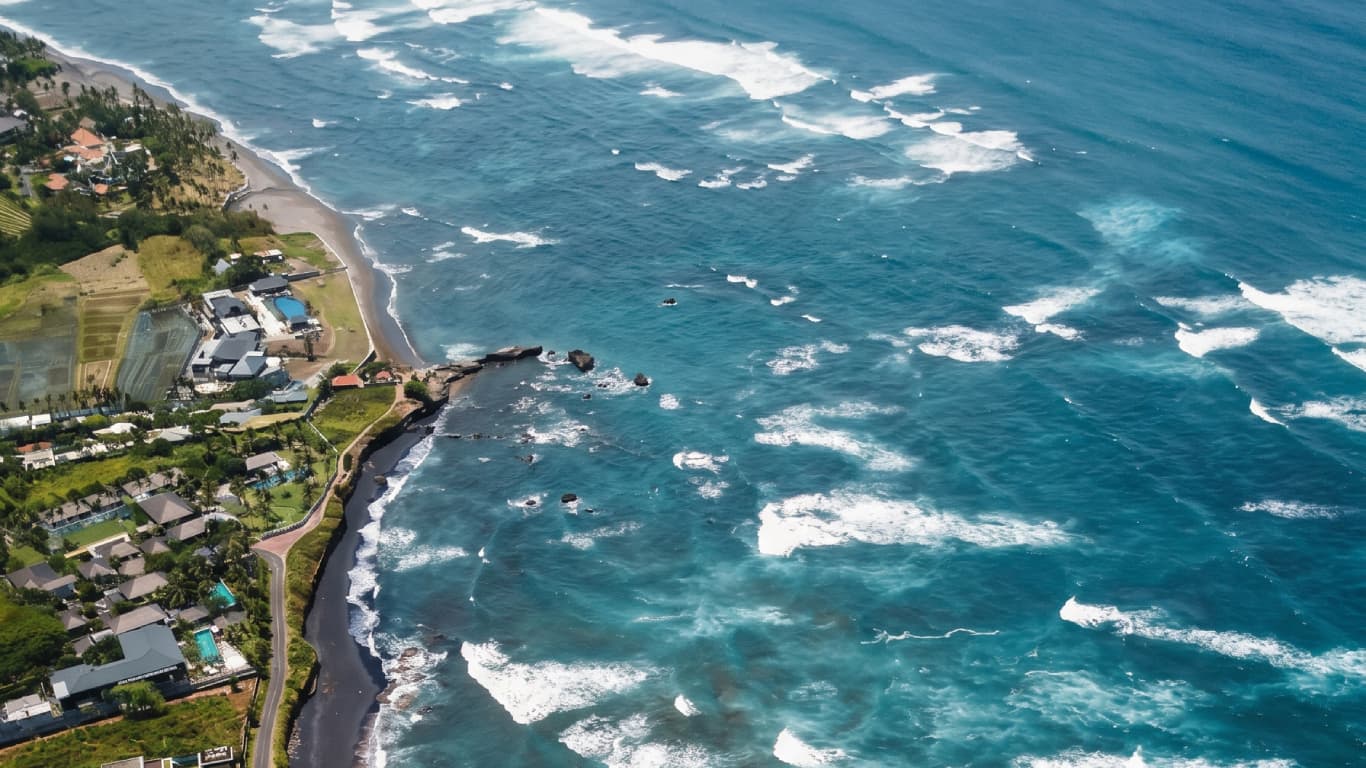
Canggu sits on Bali's southwest coast, a short distance north of Seminyak and about 20 to 25 kilometers from Ngurah Rai International Airport (DPS). On paper that sounds close, but Bali traffic is unpredictable, so the actual drive usually takes 30 to 45 minutes, and can stretch past an hour during peak times.
Most first-time visitors arrange one of the following:
- Private airport transfer, usually pre-booked through a hotel or villa, at roughly IDR 300,000 to 650,000 depending on the vehicle and provider
- Grab or Gojek, generally cheaper at roughly IDR 200,000 to 350,000, though fares move with demand and you will need to walk to a designated pickup zone outside arrivals
- Official metered taxi, available at the airport, best for anyone who prefers not to pre-book
If it is your first time in Bali at all, booking a private transfer in advance is the easiest option. It removes the guesswork of finding the right pickup zone after a long flight.
Before You Fly: Entry Requirements and Practical Basics
A few things are worth sorting out before you land, because they are much easier to handle from home than at the airport.
Tourist levy. International visitors pay a one-time Bali tourist levy of IDR 150,000 (around USD 10) per person, children included. It is paid online through the official Love Bali website or app, and you receive a QR code voucher by email. Paying before you fly means fewer queues on arrival.
Arrival declaration. International arrivals also need to complete the All Indonesia arrival declaration online, within three days before arrival. Keep the QR code handy for airport checks.
Check current rules. Entry requirements and fees change, so confirm the details on official sources shortly before your trip rather than relying on any single guide, including this one.
Staying connected. Sort out a local SIM or eSIM so you have maps and ride-hailing the moment you land. Both Grab and Gojek are central to getting around in Canggu.
Is Canggu Expensive?
Canggu is one of the pricier areas in Bali, especially compared to Ubud or the east coast, but the range is wide. The figures below are typical Bali estimates, and Canggu tends to sit toward the higher end.
| Typical cost | |
| Local warung meal | USD 2 to 5 |
| Street food portion | USD 1 to 3 |
| Trendy cafe or casual restaurant | USD 10 to 20 |
| Fine dining | USD 30 or more per person |
| Scooter rental | USD 5 to 7 per day |
| Hostel or homestay | USD 5 to 20 per night |
A trip built around beach clubs, boutique villas, and restaurant dinners will add up quickly. A trip built around local warungs, guesthouses, and scooter rentals can still be quite affordable. Most visitors land somewhere in the middle, which makes Canggu feel like a mid-range trip to a trendy coastal town rather than a backpacker destination or a luxury resort strip.
Best Time to Visit Canggu
The dry season, roughly April through October, is generally considered the best time to visit. Within that window, May, June, and September tend to offer the best balance of good weather, manageable crowds, and reasonable prices. July and August are peak season, with higher prices and busier beaches and cafes. The wet season, November through March, still sees plenty of sunshine, just with short, heavier downpours mixed in.
If surfing is a priority, June through September usually brings the most consistent conditions. If keeping costs down matters more, February, March, and November tend to have the cheapest flights and accommodation.
Nyepi, Bali's Day of Silence. If your dates fall in March, check when Nyepi lands. In 2027 it falls on Monday, 8 March, and it runs for 24 hours from 6:00 AM. The airport closes, everyone stays indoors, beaches are off limits, and internet access may be cut. Many visitors enjoy it as a quiet day at their hotel, but you do not want to be caught off guard by a flight on that date.
Understanding Canggu's Areas
Canggu is not a single strip. It is made up of a few connected neighborhoods, each with its own character:
- Batu Bolong: the busiest, most walkable core, with the highest concentration of cafes, restaurants, and nightlife
- Berawa: a more polished, resort-like area with beach clubs and a family-friendly feel
- Pererenan: quieter and more spread out, popular with long-term digital nomads and wellness travelers
Picking the right base matters more here than in most towns, since the connecting roads are limited and travel between areas takes longer than the map suggests. For a full breakdown of each one, see our guide on Berawa vs Batu Bolong vs Pererenan.
If you want an easy first base, Rimbun Canggu Hotel sits near Batu Bolong, close to the cafes, restaurants, and beach that most first-time visitors want within reach.
Getting Around Canggu (and What to Know About Scooters)
A scooter is the most common way to get around, but it is not required. Grab and Gojek work throughout the area, private drivers are easy to arrange through your hotel, and Batu Bolong itself is walkable.
If you do plan to ride, a few rules are worth knowing:
- You need the right licence. Indonesian law requires foreign drivers to carry an International Driving Permit alongside their national licence, and for a scooter it needs to cover motorcycles (Category A). A car-only permit does not cover a scooter.
- Police checks are common in Canggu. Officers typically check the vehicle registration, your licence, and your permit, and fines for missing documents are charged per document.
- Insurance can be affected. Riding without the correct licence can void your travel medical cover if you have an accident, so check your policy before you rent.
- Helmets are mandatory for both rider and passenger.
If you are not an experienced rider, using ride-hailing or a driver instead is a perfectly good way to see Canggu, and Canggu's traffic can be hectic.
What to Actually Do in Canggu
Most first-time visitors end up filling their days with some combination of the following:
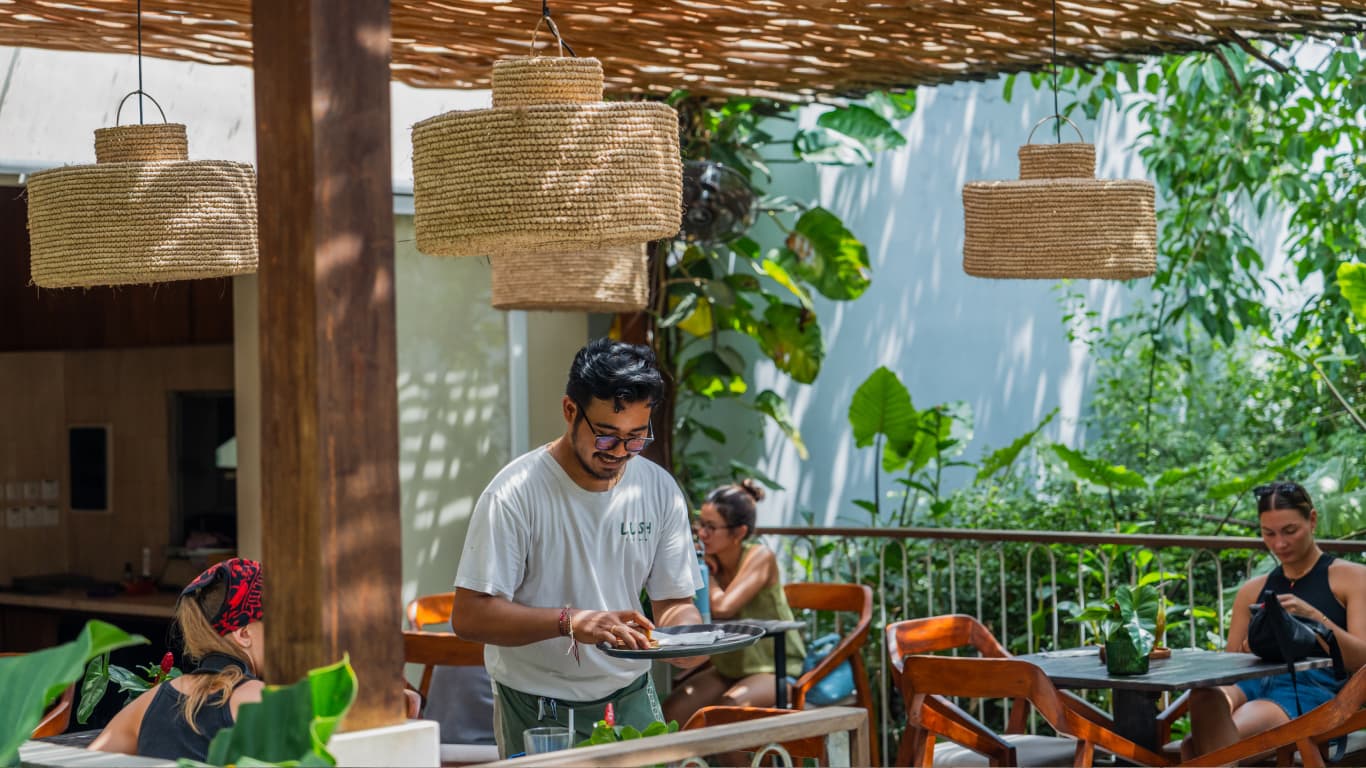
Coffee and cafe culture. Canggu has one of the strongest coffee scenes in Bali, with everything from serious specialty roasters to relaxed all-day cafes built for working remotely. See our guide to the best coffee shops in Canggu for specific recommendations.
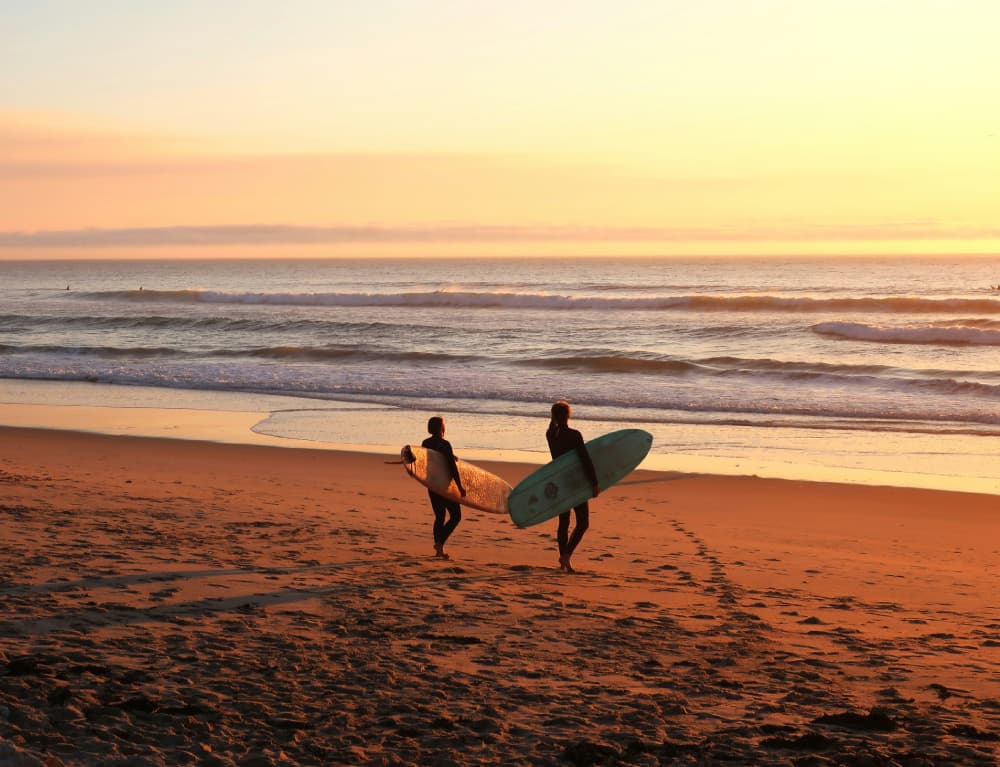
Beaches and surfing. The coastline runs through Batu Bolong, Berawa, and Echo Beach, each with a different level of wave intensity, from beginner-friendly to advanced reef breaks. Rip currents can be strong at some Canggu beaches in any season, so check the flags and ask your hotel about safe swimming spots.
Wellness and yoga. Canggu has become one of Bali's main wellness hubs, with yoga studios, gyms, and spas spread throughout the area, particularly around Pererenan.
Food beyond cafes. The dining scene ranges from three-dollar local warungs to farm-to-table restaurants, concentrated mostly around Batu Bolong and Berawa.
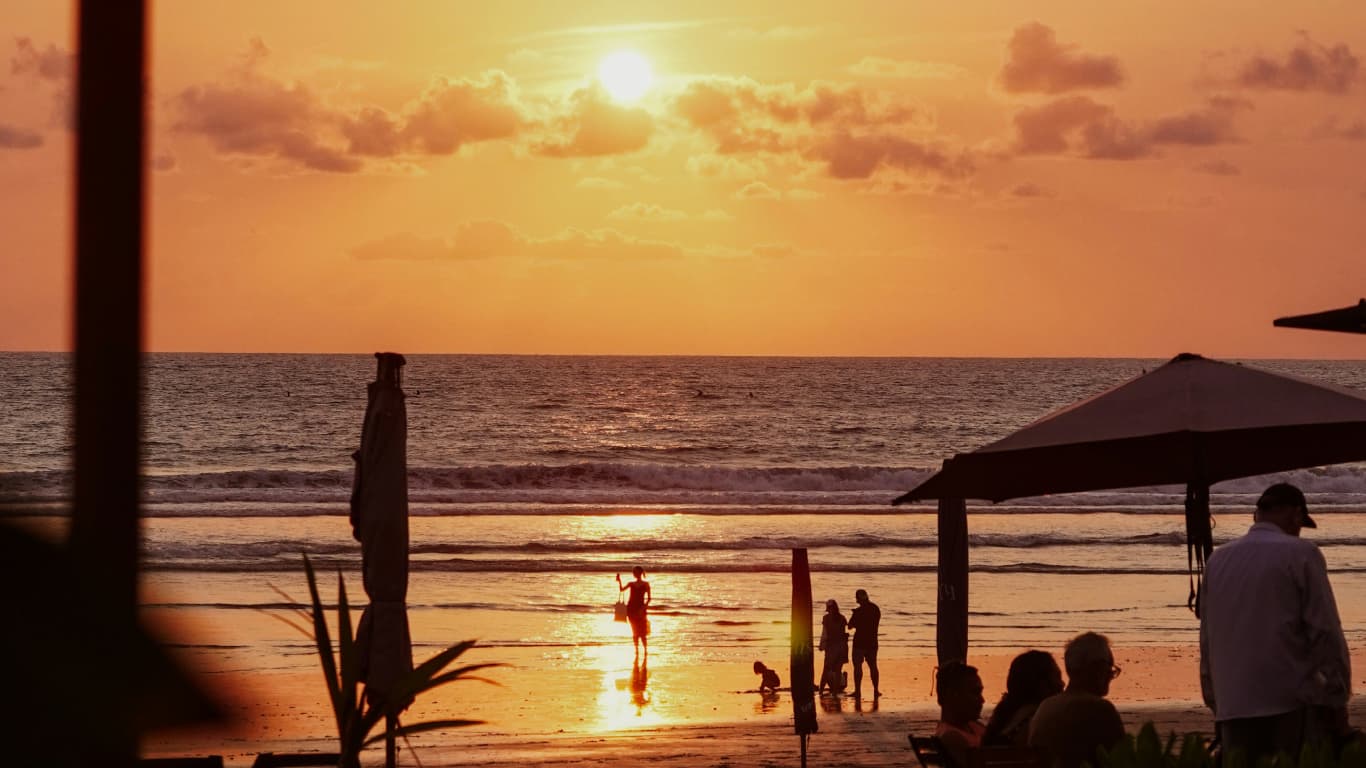
Sunset. Sunset is one of Canggu's daily rituals. As the afternoon cools down, surfers, locals, and visitors all drift towards the coast, and the beach feels at its liveliest while the sky changes colour. Batu Bolong and Echo Beach are the two most popular spots, with beach bars where you can settle in with a drink. Pererenan is the quieter option, with more open sand and fewer people. Arrive a little early in peak season if you want a good spot.
Nightlife. Canggu's nightlife leans more towards beach bars and sundowner sessions than big clubs, though it does get lively. Batu Bolong is the centre of it, with beachfront bars and late-night spots that carry on well after dark. Berawa suits a more polished beach club evening, while Pererenan is the calmest of the three if you would rather end the night with a slow dinner. If you plan on going out, staying in or near Batu Bolong keeps the ride home short.
How Many Days Do You Need
Most guides suggest a minimum of 3 to 5 days to get a real feel for Canggu without rushing. Three days is enough to cover the basics: a slow morning routine, a beach day, some wellness time, and a proper look at the food scene, without trying to see everything. If you want a structured plan rather than figuring it out as you go, see our guide on how to spend 3 days in Canggu.
A slow-travel tip from Rimbun. The most common first-trip mistake in Canggu is over-planning. There is always another cafe, another beach, another place to add to the list. Leave a few unscheduled hours each day for a long coffee, a swim, or a nap. Some of the best moments in Canggu are the ones you did not plan.
Explore Canggu by Topic
Once you have the basics covered, these guides go deeper:
- How to spend 3 days in Canggu: a slow-travel itinerary covering coffee, beaches, wellness, and sunsets
- Berawa vs Batu Bolong vs Pererenan: which neighborhood fits your travel style
- Best coffee shops in Canggu: 11 cafes worth visiting, from specialty roasters to relaxed workspaces
Frequently Asked Questions
How far is Canggu from the airport? Canggu is about 20 to 25 kilometers from Ngurah Rai International Airport, which usually takes 30 to 45 minutes by car, though it can take over an hour during peak traffic.
Is Canggu good for a first Bali trip? Yes. Canggu works well for first-time visitors because it combines beaches, cafes, wellness, and nightlife in one relatively compact area, without requiring long drives to see a variety of things.
Is Canggu expensive? Canggu is one of the pricier parts of Bali, but costs vary widely. Local warung meals typically cost around USD 2 to 5, while a meal at a trendy cafe is more like USD 10 to 20, and fine dining can reach USD 30 or more per person.
How many days should I spend in Canggu? Most visitors spend at least 3 to 5 days in Canggu. Three days is enough for a solid first impression, while longer stays allow more time to explore different neighborhoods and slow down.
What is the best area to stay in for a first visit? Batu Bolong is generally the easiest choice for first-time visitors, since it is central, walkable, and close to most cafes, restaurants, and beaches.
Do I need a scooter to get around Canggu? No. A scooter is the most common way to get around, but Grab, Gojek, and private drivers all work well, and Batu Bolong itself is walkable.
Do I need an international driving permit to ride a scooter in Bali? Yes. Indonesian law requires an International Driving Permit that covers motorcycles, alongside your national licence. Riding without one can lead to fines and may affect your travel insurance.
Is there a tourist tax in Bali? Yes. International visitors pay a one-time tourist levy of IDR 150,000 (around USD 10), which can be paid online in advance through the official Love Bali website or app. Check current rules before you travel, as requirements can change.
What is Nyepi and does it affect my trip? Nyepi is Bali's Day of Silence, a 24-hour period when the airport closes and everyone stays indoors. In 2027 it falls on 8 March, so avoid planning flights or sightseeing for that day.
Staying in Canggu for the first time? Rimbun Canggu Hotel is centrally located and makes a practical base for exploring the area's cafes, beaches, and neighborhoods without committing to just one part of town.